When I picture where Koons’s sculptures belong, I think about Trump’s plan for a 90,000 square foot ballroom, and the art collectors who funded it.
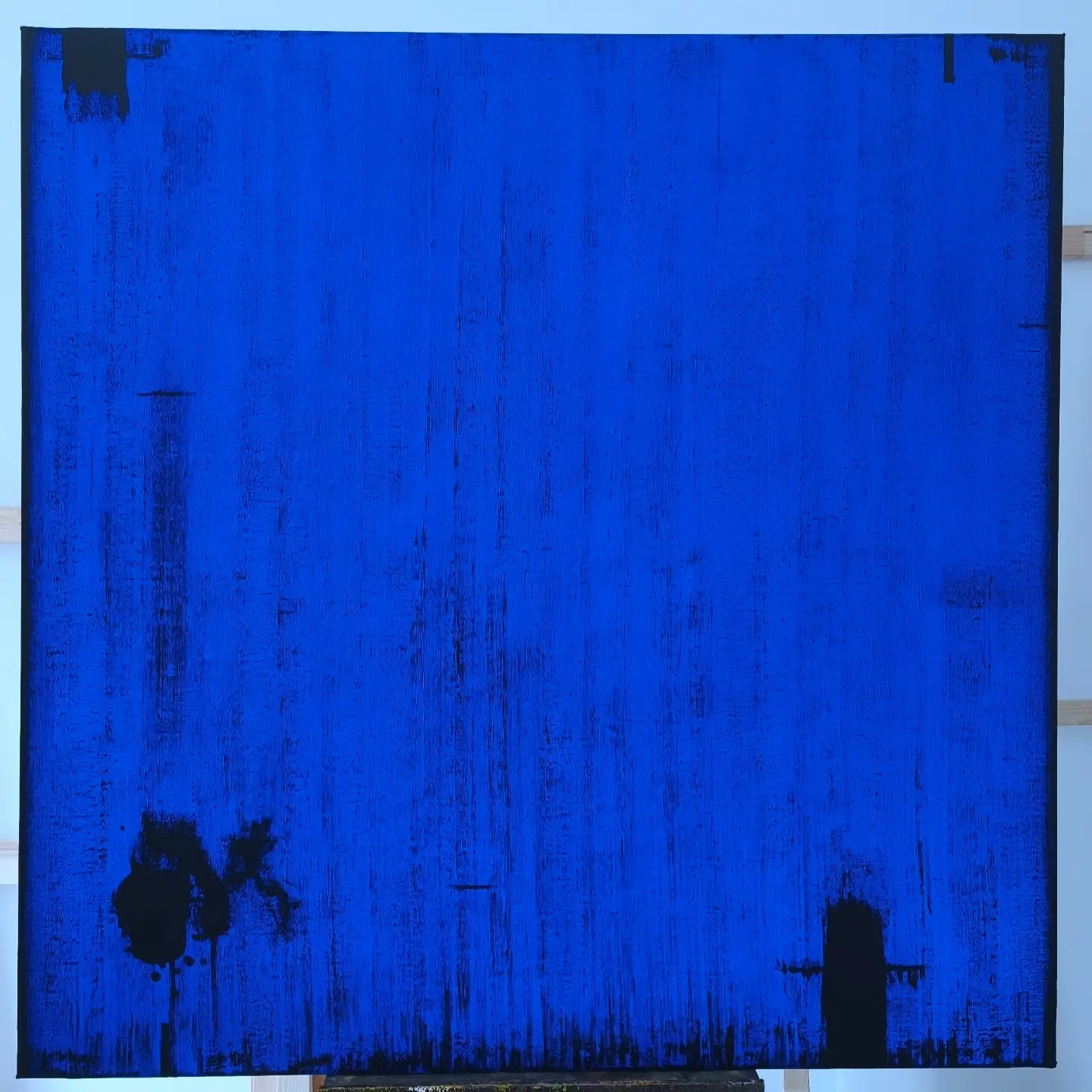
Jeff Koons is a hit-or-miss artist whose sculptures always give viewers something to talk about. The same isn’t true of his paintings, none of which have ever become memorable because there is nothing particularly arresting about them. This doesn’t mean that painting is dead, just that his are.
A lot of the discourse around his sculptures gets unnecessarily heated, with (often White) critics arguing over whether or not they critique capitalism or celebrate consumerism, which seems beside the point when fabricating one of his “Balloon Dogs” costs more money than the majority of Americans make in a year. Then there are the hilarious narratives circling his work, such as Arthur Jafa’s deadpan, tongue in cheek assertion in a 2020 New Yorker article that Koons is “a very light skinned Black guy passing for white,” and that the floating basketballs in his Equilibrium series are “testicles, connoting everything from castration to Black sexual prowess.” With Koons’s sculptures, it is hard not to think that his art exists in one world and the writing about it in another.
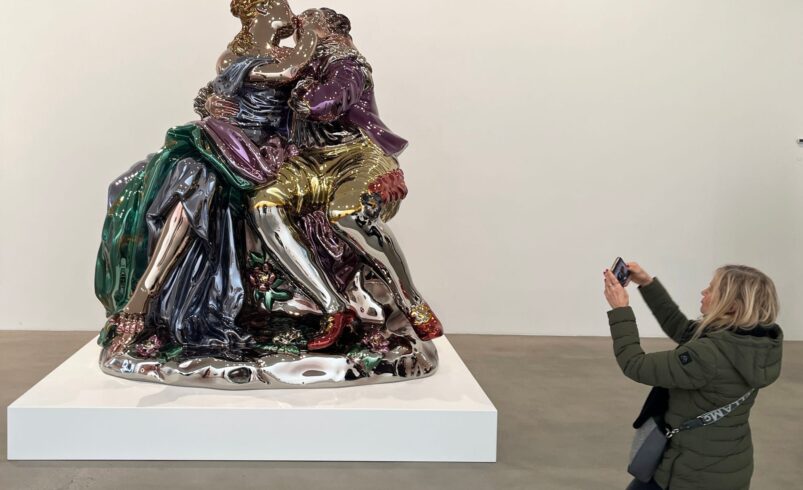
It was with this split in mind that I visited his latest exhibition, Jeff Koons: Porcelain Series at Gagosian Gallery. I knew from the gallery press release that one of my experiences would be seeing myself both reflected and distorted in the mirror polished stainless steel surface with a transparent color coating. The sculptures depict curvaceous figures, such as “Aphrodite” (2016–21), “Three Graces” (2016–22), and “Kissing Lovers” (2016–25). The press release notes: “The objects’ surfaces fuse their sensorial allure with symbolic potential. The finish affirms the viewer, making them a participant in the artwork and highlighting the works’ stylistic and conceptual interplay of past, present, and future.”
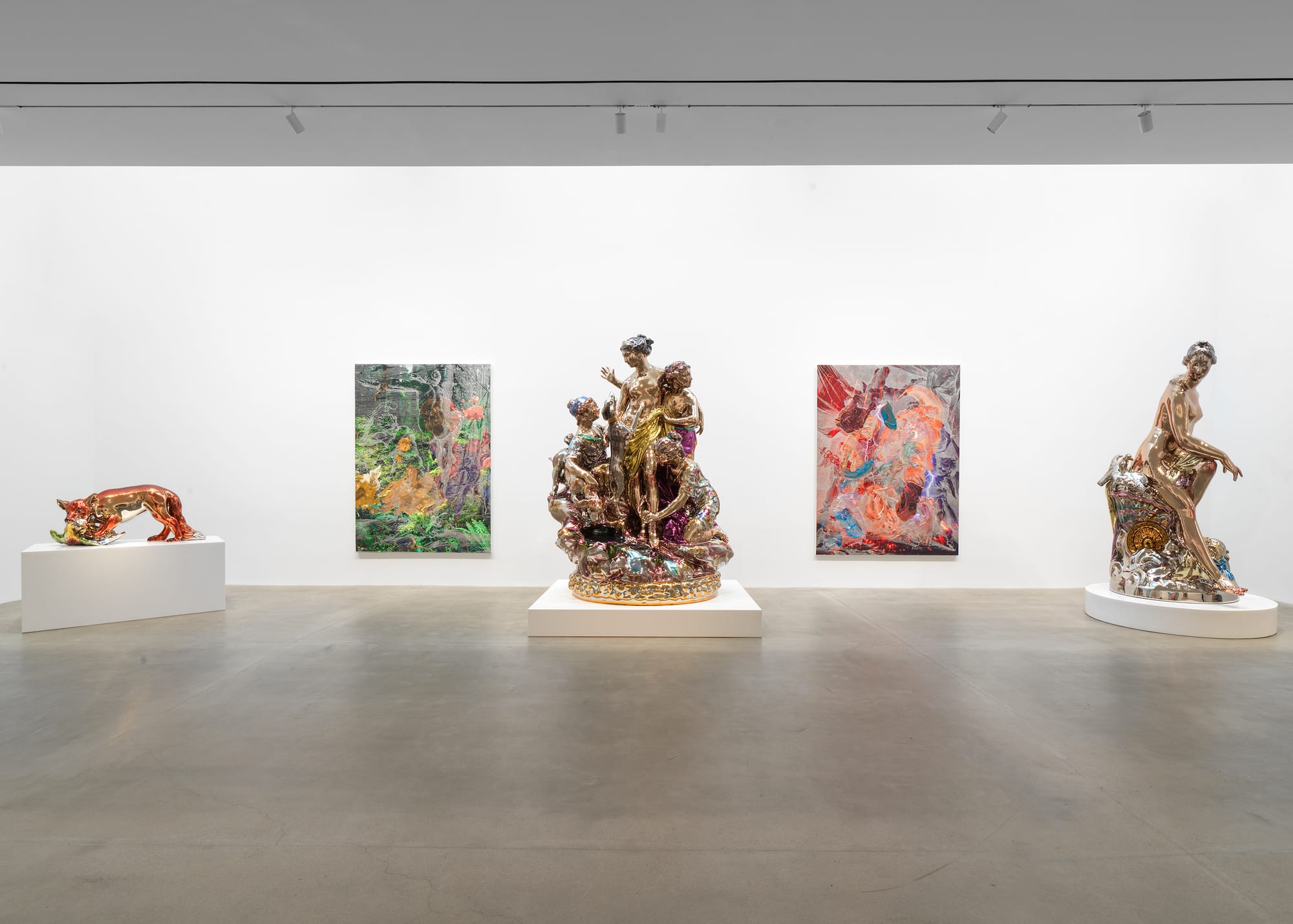
There is something mildly interesting about seeing a distorted, miniaturized version of yourself reflected in a shiny surface that you realize is a shapely arm or a furless fox. It is like looking into a funhouse mirror at a carnival or standing in front of Anish Kapoor’s bean shaped “Cloud Gate” in Chicago’s Millennium Park and taking a selfie. Once is enough, though. A stainless steel hubcap will distort you if that is your thing, but seeing yourself this way is apt to make you forget what you are looking at, as everything falls away, so its uncanny effects are fleeting.