
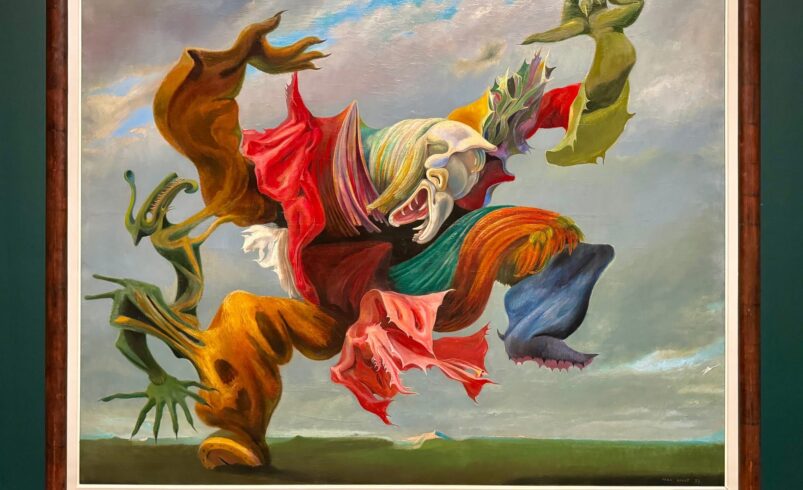
The traumas of war and genocide and the fascist leanings of Salvador Dalí are among the subjects that this sprawling exhibition leaves out.
PHILADELPHIA When he was five years old, Salvador Dalí pushed his friend off a bridge. At 29, he “trampled” a woman after she told him he had beautiful feet. At 30, he was temporarily ousted from the Surrealist art movement because of his infatuation with Hitler. And at 35, after sending the movement’s co-founder, André Breton, letters that described “feeling real pleasure and considerable sexual excitement in reading about” the lynchings of Black Americans, his expulsion was made permanent.
Perhaps we shouldn’t expect Dreamworld, the wide ranging commemoration of Surrealism’s 100th anniversary currently on view at the Philadelphia Art Museum, to divulge every grisly detail of Dalí’s inhumanity. But it is disappointing that it doesn’t even attempt to scratch the surface. On its face, the exhibition is impressive, offering a rare glimpse at an enormous array of Surrealist masterworks, from the legendary to the overlooked. The timing could not be better: We have much to learn in this moment from a movement that was both explicitly antifascist and radically hopeful and from how the not so antifascist Dalí broke from it. But Dreamworld presents precious little of the historical and political context for example, the birth of the movement out of the grotesque terrors of World War I that would help viewers grasp the relevance of what’s in front of them.
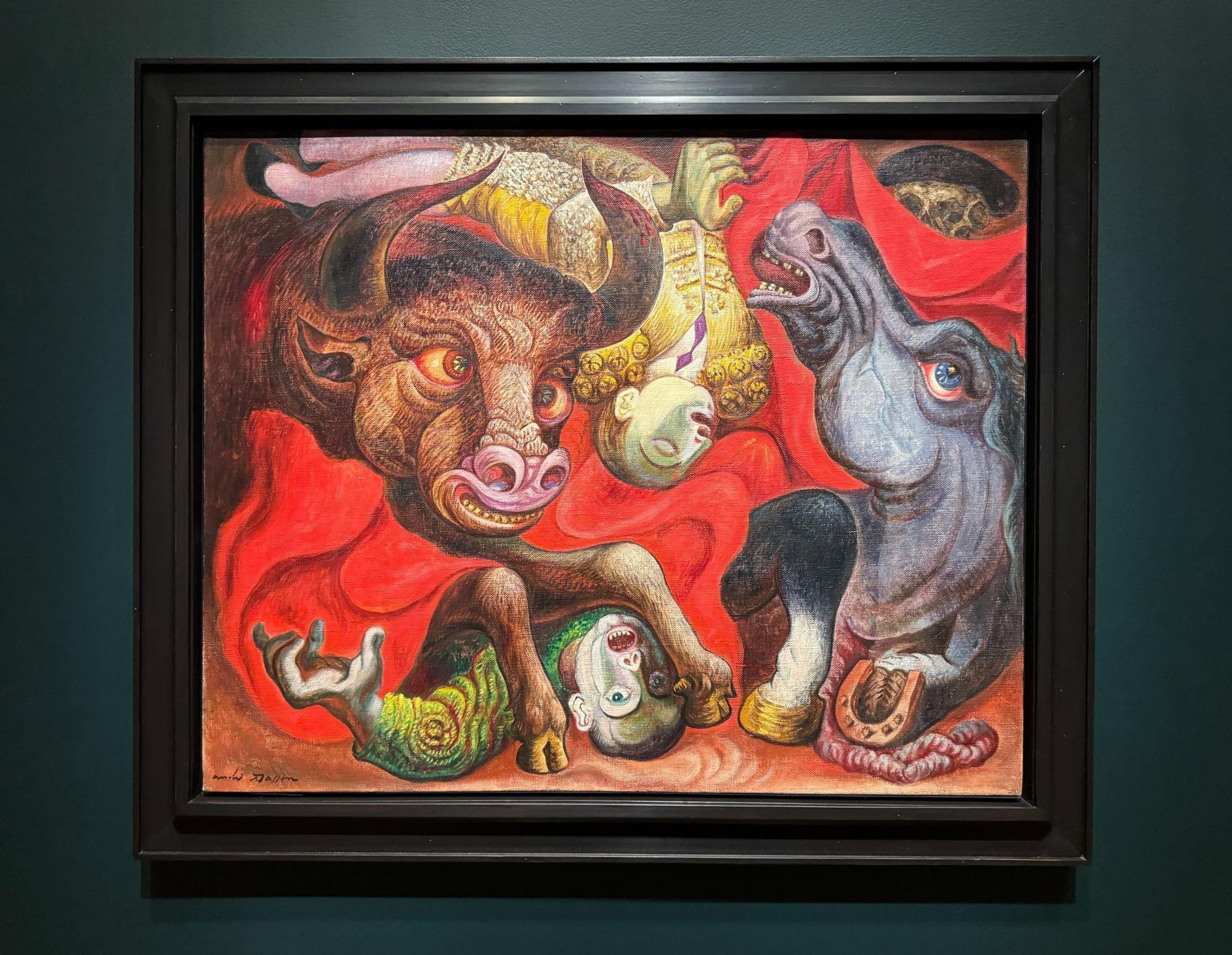
Instead, it groups the art into vague categories and provides wall texts full of platitudes. Take a look at the difference between how the exhibition’s didactics describe the Surrealists’ interest in nature and that of cultural critic Naomi Klein, for instance. The wall text states: “The Surrealists believed that the rationalism associated with modern life had the pernicious effect of estranging people from themselves … Surrealist landscape painting presents natural scenery as a window into the imagination.” In contrast, Klein writes: “They attempted to merge with the natural world anything that could provide an escape from the machinery of death that disguised itself as progress.” The result of Dreamworld’s surface level approach is perhaps the most surreal of all: a show about one of the 20th century’s most compelling art movements that is, somehow, kind of bland.