




His social realism style was well suited to the difficult subjects, including racism and other forms of oppression, he took on in his art.
BOSTON Witnessing Humanity: The Art of John Wilson at the Museum of Fine Arts, Boston highlights the artist’s devotion to making Black people “become really visible,” as he put it in a 1970 talk at Boston University. The first significant exhibition since his 90th birthday retrospective at the Danforth Art Museum in Framingham, Massachusetts, in 2012, the show features paintings, sculpture, prints, drawings, and book illustrations in which Wilson documents and honors blackness.
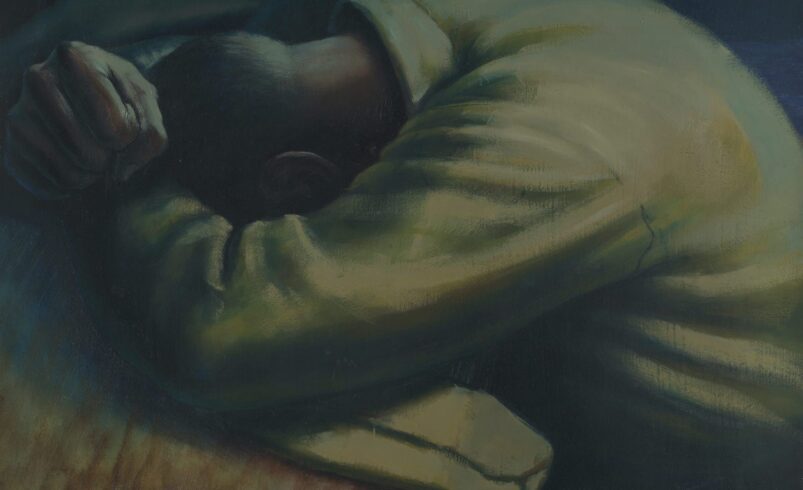
The humanity that Wilson, born in 1922, witnessed in his lifetime featured a great deal of hopelessness and dejection, feelings summed up in “Black Despair” (1945). In the painting, a Black man seated at a table hides his head in his arms, his right hand held out in a tight fist. While this gesture signals anguish and agitation, it can also be read as defiance.
The figure in the painting, Wilson’s brother, William, endured racial attacks and discrimination while stationed at a military base in the South. “He was very depressed,” the artist once recalled. “Black soldiers … were subject to all the indignities of Jim Crow, the segregated buses, the segregated everything.”
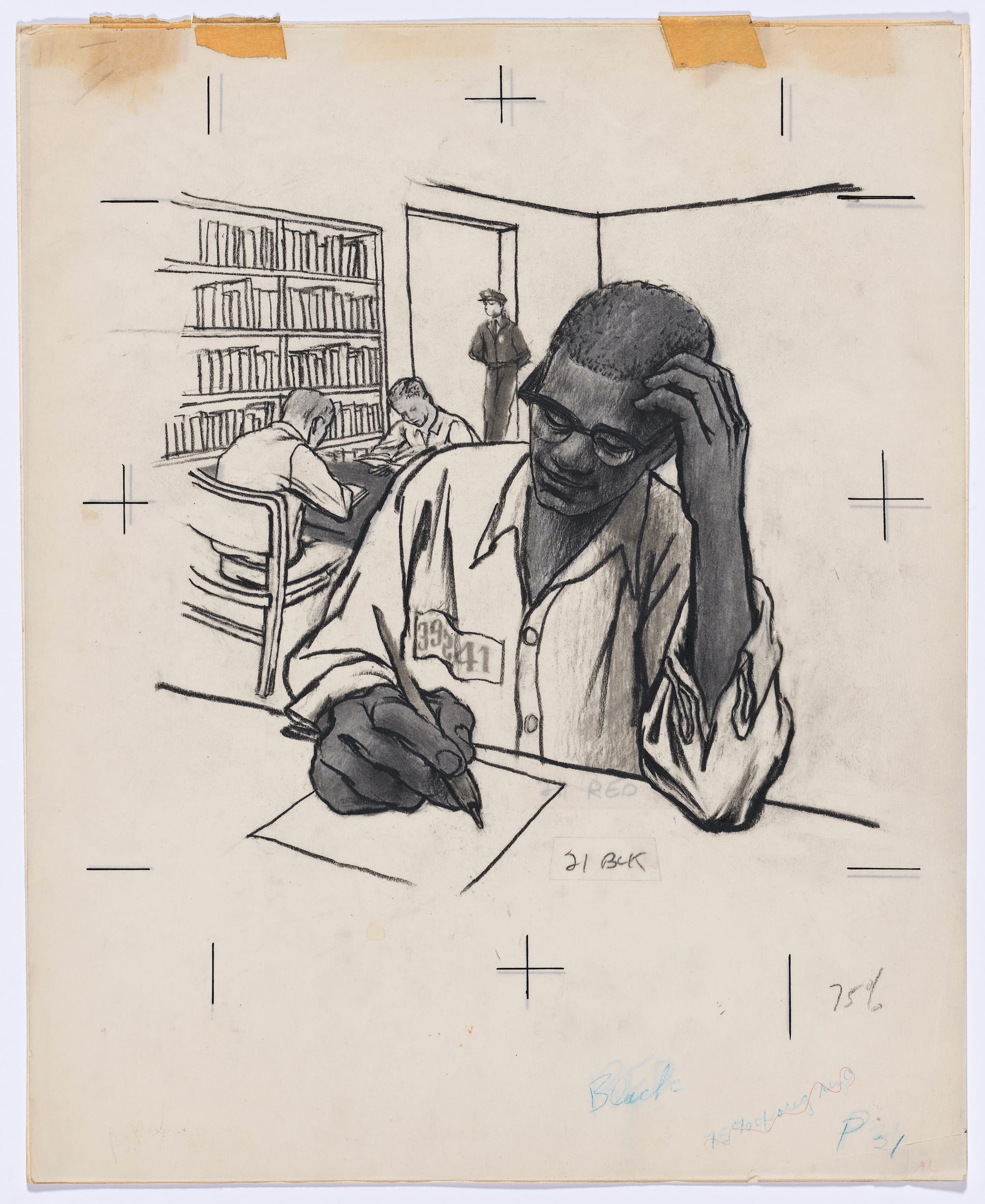
Wilson’s social realism style was well suited to the difficult subjects he took on in his art. One of his most famous paintings, the 1952 mural “The Incident,” depicts a group of hooded Klansmen lynching a Black man as a Black family watches in terror from a nearby window. Painted in Mexico and now lost, “The Incident” is represented in the show by preliminary studies and a black and white photograph of the original. (The piece was also the subject of the Yale University Art Gallery’s 2019 show Reckoning with ‘The Incident’: John Wilson’s Studies for a Lynching Mural.) His lithograph “The Trial” (1951), depicting a Black man cowering below a row of menacing White judges, still feels relevant.