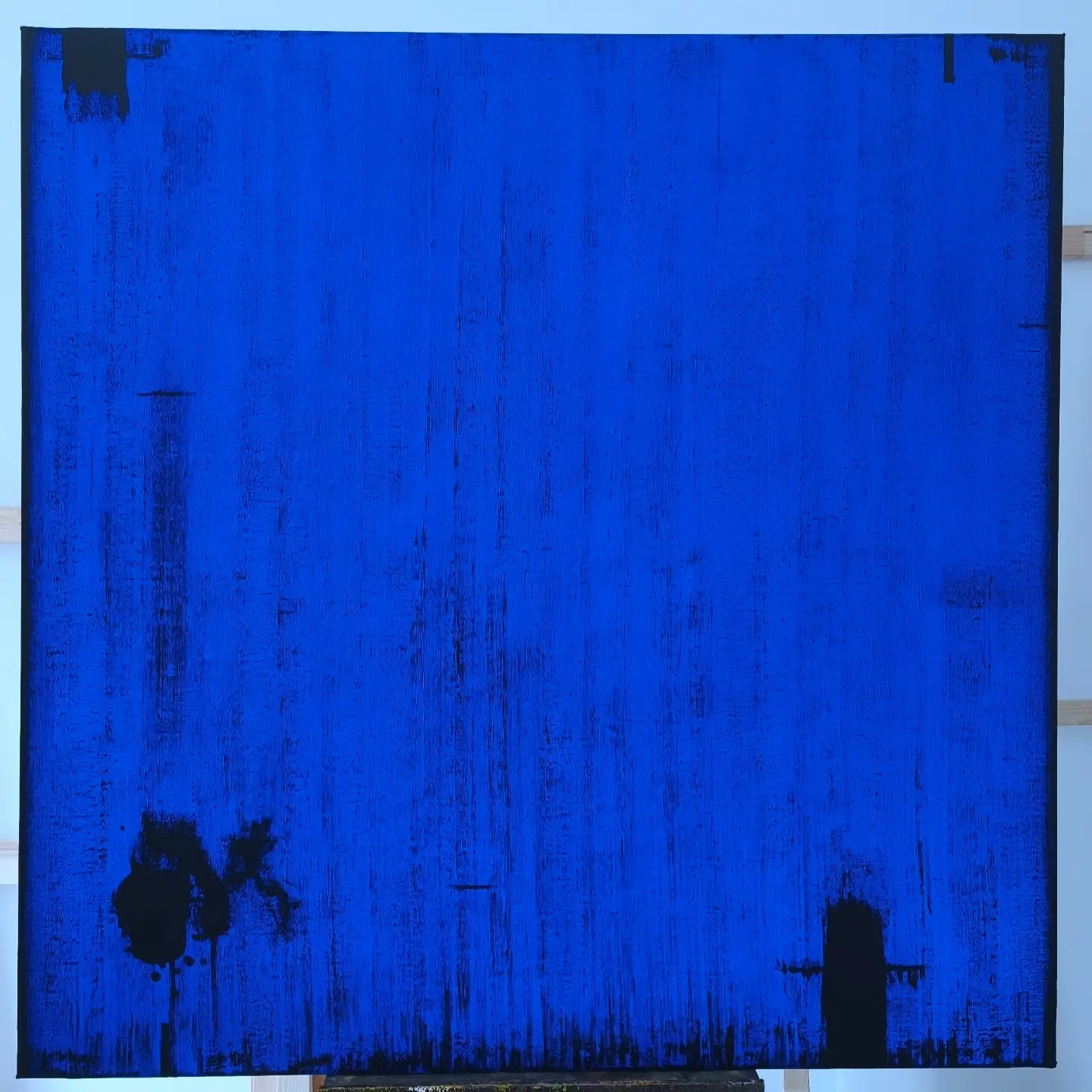
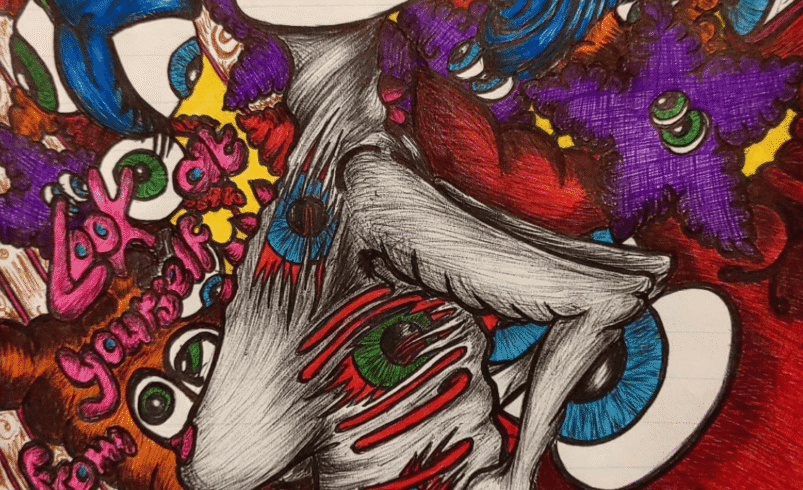
Robin Van Der Walt is an artist whose distinctive practice brings together drawing, poetry, written reflection, and emotional storytelling. Working primarily with ballpoint pen and ink on paper, Robin creates detailed and vivid artworks that explore the complexities of human experience. His work moves across expressionist and impressionist approaches while also incorporating elements of pop art and abstraction, resulting in a visual language that is both personal and multifaceted.
At the heart of Robin’s artistic practice is an interest in the emotional and psychological dimensions of life. His drawings often explore themes of love, loss, freedom, identity, and the human condition, creating opportunities for viewers to reflect on their own experiences. Through the combination of intricate line work and written words, he creates artworks that communicate on more than one level.
For Robin, art becomes a space where visual expression and language can exist together. His drawings invite viewers not only to look but also to read, think, and feel.
Drawing With Ballpoint Pen and Ink
Ballpoint pen and ink form the foundation of Robin Van Der Walt’s artistic practice. Although these materials may appear ordinary or familiar, Robin transforms them into tools capable of creating highly detailed and emotionally expressive works.
The ballpoint pen allows him to develop intricate lines, patterns, textures, and tonal variations. Through repeated marks and careful attention to detail, he builds complex visual surfaces that can draw the viewer into the artwork.
The process of working with such precise materials can be demanding, requiring patience and concentration. Yet this meticulous quality also gives his drawings a distinctive character. Each line contributes to the overall composition, allowing small details to accumulate into larger emotional and visual narratives.
Ink similarly provides opportunities for contrast and expressive intensity. Together, these materials create a visual language that is both intimate and immediate.
A Meeting of Expressionism and Impressionism
Robin’s work reflects influences from expressionism and impressionism, while also incorporating aspects of pop art and abstraction. This combination allows him to move freely between different ways of seeing and representing the world.
The expressionist qualities within his work can be seen in his interest in emotion and psychological experience. Rather than simply reproducing external reality, he often seeks to communicate what lies beneath the surface.
At the same time, impressionist influences can be found in his sensitivity to atmosphere, perception, and visual experience. Elements of pop art introduce another dimension, connecting his work to recognizable cultural imagery and contemporary visual language.
His engagement with abstraction allows him to move further away from literal representation. Shapes, lines, and compositions can become vehicles for expressing ideas and emotions that may not have a straightforward visual form.
Together, these influences create a practice that is difficult to define within a single artistic category. Robin’s work instead reflects an ongoing exploration of different visual possibilities.
The Power of Words and Images
One of the defining characteristics of Robin Van Der Walt’s art is the relationship between visual imagery and written language.
Poetry and written reflections frequently accompany or become part of his artistic process. Words provide another layer through which he can communicate ideas, emotions, and personal observations.
The combination of text and imagery creates a layered experience for the viewer. A drawing may communicate one idea visually, while the accompanying words introduce another perspective or deepen the emotional meaning.
This relationship between language and image encourages viewers to spend more time with the artwork. Rather than offering an immediate and complete interpretation, Robin’s pieces can unfold gradually as the viewer considers both what they see and what they read.
The words may clarify, challenge, or expand the visual experience, creating a dialogue between the two forms of expression.
Exploring Love and Loss
Love and loss are recurring themes within Robin’s artistic world. These universal human experiences can be deeply personal, yet they also connect people across different backgrounds and circumstances.
Through his art, Robin explores the emotional complexity that surrounds relationships and the experiences of separation, memory, and longing.
His drawings do not necessarily present these themes in simple or predictable ways. Instead, they reflect the complicated emotions that often accompany them. Love can be connected to vulnerability, while loss can carry both pain and memory.
By expressing these ideas through visual and poetic language, Robin creates a space where viewers may recognize aspects of their own experiences.
The emotional openness of his work allows it to function as both personal reflection and shared human experience.
Mental Freedom and the Search for Inner Space
Another important theme in Robin’s practice is mental freedom. His work explores the idea of breaking away from limitations, whether those limitations are emotional, psychological, or imposed by external circumstances.
The intricate drawings and written reflections can be understood as part of an ongoing search for greater understanding and freedom of thought.
This interest in mental freedom connects closely with Robin’s broader exploration of the human condition. His work asks viewers to consider the ways in which people experience their inner worlds and how they attempt to navigate the complexities of life.
The act of creating itself may become a form of freedom a way to process thoughts and emotions that cannot always be easily communicated through ordinary conversation.
A Contemplative Artistic Journey
Robin Van Der Walt’s artistic practice reflects a deeply personal and contemplative journey. His drawings emerge from an ongoing process of observing life, reflecting on personal experiences, and exploring the emotional realities shared by humanity.
The combination of detailed ballpoint drawings and poetic writing allows him to communicate thoughts that exist somewhere between the visual and the verbal.
His work does not simply document what he sees. Instead, it reveals how he thinks and feels about what he observes.
This makes his art particularly introspective. The viewer is invited into a world shaped by questions, emotions, memories, and reflections on existence.
Art as a Reflection of the Human Experience
At its core, Robin Van Der Walt’s work is concerned with the human experience in all its complexity. Through themes of love, loss, freedom, and emotional struggle, he examines the experiences that shape individuals and connect them to one another.
His use of ballpoint pen and ink provides the technical foundation for this exploration, while poetry and written reflections add emotional and philosophical depth.
The resulting artworks are layered and intimate. They encourage viewers to slow down and engage with the details, allowing the meaning of the work to develop gradually.
A Distinctive Visual and Poetic Language
Robin Van Der Walt has developed an artistic language that exists at the intersection of drawing and poetry. His detailed works demonstrate a commitment to intricate craftsmanship, while his use of expressionist, impressionist, pop art, and abstract influences gives his practice considerable visual range.
Through the interplay of words and images, he explores the questions and emotions that define human life. His artworks become more than drawings on paper; they become visual reflections on memory, relationships, freedom, vulnerability, and existence.
Ultimately, Robin’s art invites viewers to look inward as much as outward. His intricate lines and written reflections create opportunities for introspection, encouraging audiences to connect the artwork with their own thoughts and experiences.
In a world where life can often feel overwhelming and difficult to explain, Robin Van Der Walt’s work offers another way of communicating. Through the quiet precision of ballpoint pen, the expressive possibilities of ink, and the emotional resonance of poetry, he continues to explore the depths of human experience one line, one word, and one reflection at a time.